Why “human-shaped” isn’t the default for real work
Picture a warehouse at shift change: pallets stacked, forklifts weaving, conveyors humming. Nobody asks for a robot with knees and ankles to move boxes from A to B, because the environment already favors wheels, forks, rollers, and fixed paths. A human shape is a compromise built for general life—stairs, door handles, crowded rooms—not for the most common industrial motions.
When a job is repeatable, designers strip away “extra” body parts and keep only what makes the task faster and safer. A tall biped has a small footprint and can reach like a person, but it also has more joints to calibrate, more ways to fall, and higher demands on sensors and control. Those costs show up as downtime, slower speeds, and stricter safety buffers around people and equipment.
That’s why real work so often goes to purpose-built bodies: stable bases, simple linkages, and tools that match the job. The goal isn’t to mimic humans; it’s to move force, reach, and time in the most reliable way the workspace allows.
Start with the task: forces, reach, surfaces, and time
Think about what the task actually “asks” the machine to do. A case-picking job might need gentle, repeatable grip force and a long reach into shelving, but almost no ability to balance or walk. A grinding or drilling job is the opposite: it demands steady force into a surface for minutes at a time, which favors a rigid frame or braced arm over anything that has to constantly correct its posture.
Surfaces and contact points matter just as much. If the floor is smooth and the route is known, rolling is hard to beat. If the work happens on a vertical plane—walls, racks, vehicle sides—the useful body is the one that can hold position without drifting. Time is the final filter: cycle time, duty cycle, and reset time. More joints and more behaviors often mean slower motions, longer tuning, and more maintenance windows, even when the robot looks impressively capable.
When wheels, tracks, legs, or rails win on mobility
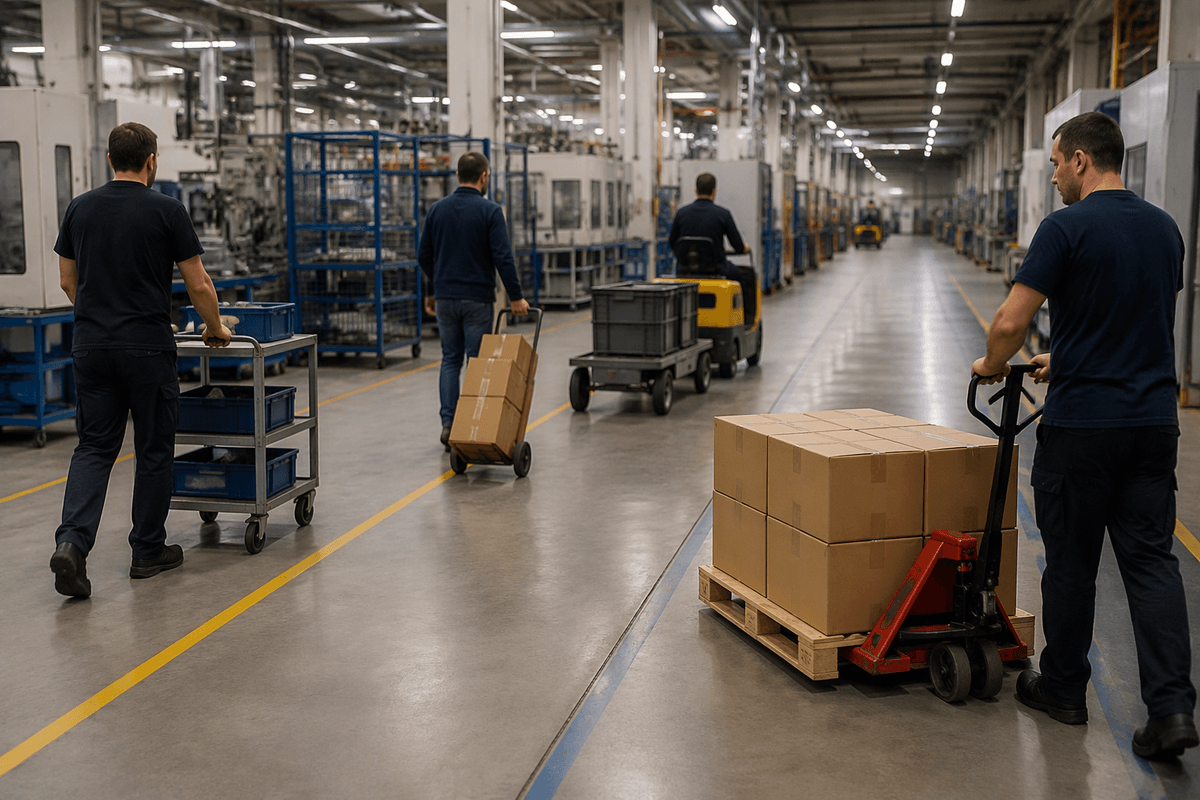
Watch how people actually move materials in a factory or hospital: carts, dollies, tuggers, pallet jacks. Wheels win whenever the surface is reasonably smooth and the path is predictable, because rolling turns battery power into distance with less control overhead. Add a suspension and bigger tires for docks and thresholds; switch to tracks when you need traction over gravel, mud, or debris and can tolerate slower turns and more floor wear.
Legs earn their keep when the environment refuses to be “made wheel-friendly”—stairs, steep grades, rubble, or stepping over pipes and cable trays. The trade-off is that walking is energy-hungry and harder to certify around people, and falls are expensive. Rails and gantries look less futuristic, but they’re a quiet mobility cheat: constrain motion to one or two axes and you get speed, repeatability, and simpler safety zones—at the cost of installing fixed infrastructure and giving up flexibility when layouts change.
Manipulators don’t need hands to be useful
You’ve probably seen a robot “hand” in a demo delicately turning a knob, then assumed that’s the requirement for real work. In practice, most manipulation in factories, labs, and back rooms is about reliably moving one known thing the same way, thousands of times. That’s why suction cups dominate carton handling, why parallel grippers beat five fingers for pick-and-place, and why hooks, forks, pins, and magnetic end effectors show up wherever parts have stable edges or flat faces.
The end tool is often more important than the arm. A simple two-jaw gripper with compliant pads can tolerate small part variation better than a complex hand with many joints to tune. Tool changers extend range without adding “fingers”: one robot can pick, place, wipe, dispense, or scan by swapping attachments. The constraint is real, though—specialized tools need consistent part presentation, clean surfaces for suction, and ongoing upkeep (filters, seals, and alignment), or cycle time and reliability suffer.
Shape follows the workspace: tight spaces, height, and hazards
Look at where the work physically lives, not where you wish it lived. Under a conveyor or inside a rack bay, a low, slim body that can slide in and rotate in place beats a tall torso that needs clearance for hips, elbows, and a fall zone. In tall spaces, reach matters more than resemblance: a compact base with a long vertical lift or telescoping column can service shelving, trucks, or machines without bringing a whole biped up to height, which also reduces tipping risk.
Hazards reshape everything. In hot, wet, dusty, or chemical areas, the “right” body is often a sealed, washdown-rated box with a simple arm and sacrificial covers, not exposed joints and sensors. The trade-off is cost and access: sealing adds weight, service takes longer, and fitting through existing doors, catwalks, and ladders can force uncomfortable compromises in payload and battery size.
Reliability, safety, and cost: the hidden design drivers
In a real deployment, the robot that wins is usually the one that can run for weeks with boring consistency. Every added joint, belt, sensor, and calibration step is another place for drift, wear, or a small crash to turn into a service ticket. That’s why “simpler body, better uptime” shows up so often: fixed paths, rigid frames, and limited behaviors are easier to test, easier to diagnose, and easier to keep within spec as parts age.
Safety pushes designs the same way. A tall, fast-moving machine with a high center of mass needs larger keep-out zones, more conservative speeds, and more fail-safes, because the consequence of a fall or a surprise swing is higher. Those safety buffers are a hidden cost: they consume floor space and reduce throughput. Specialized forms can lower risk by staying low, staying constrained, or bracing against the environment—but they may require extra infrastructure, guarding, and planned maintenance to stay safe and compliant.
A quick way to pick the right robot body
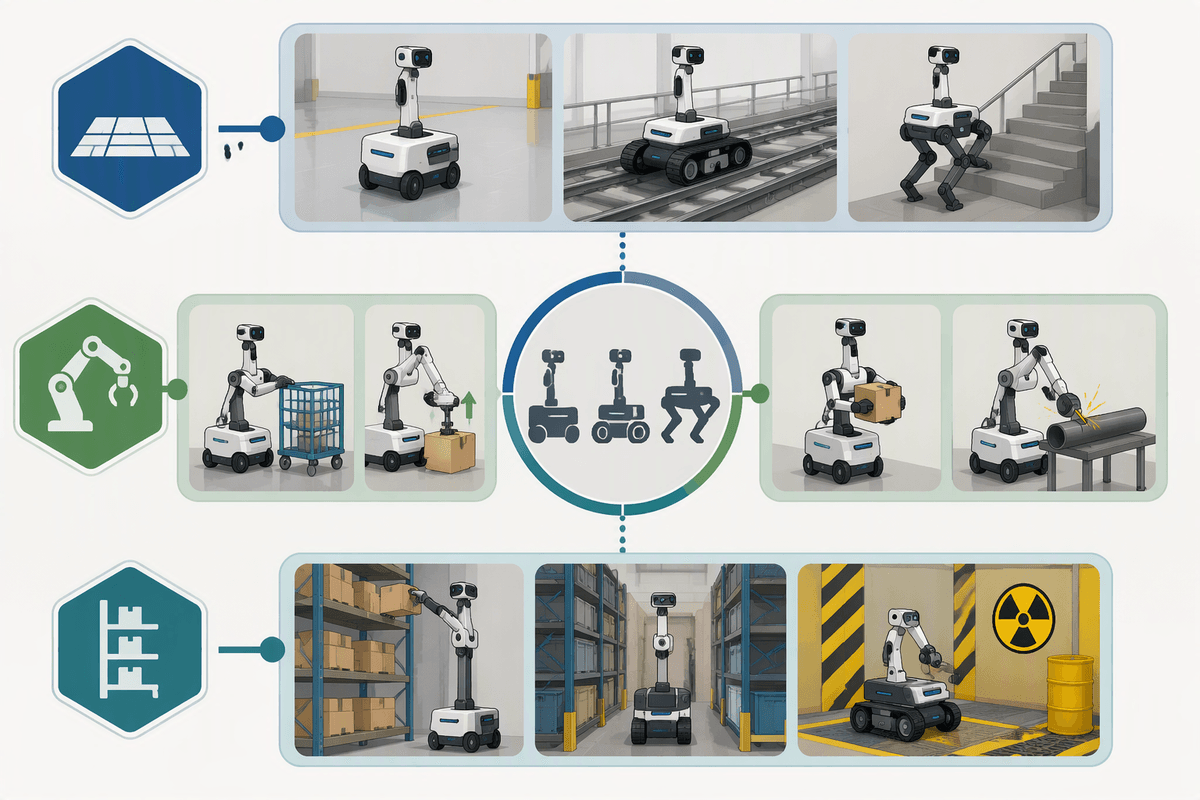
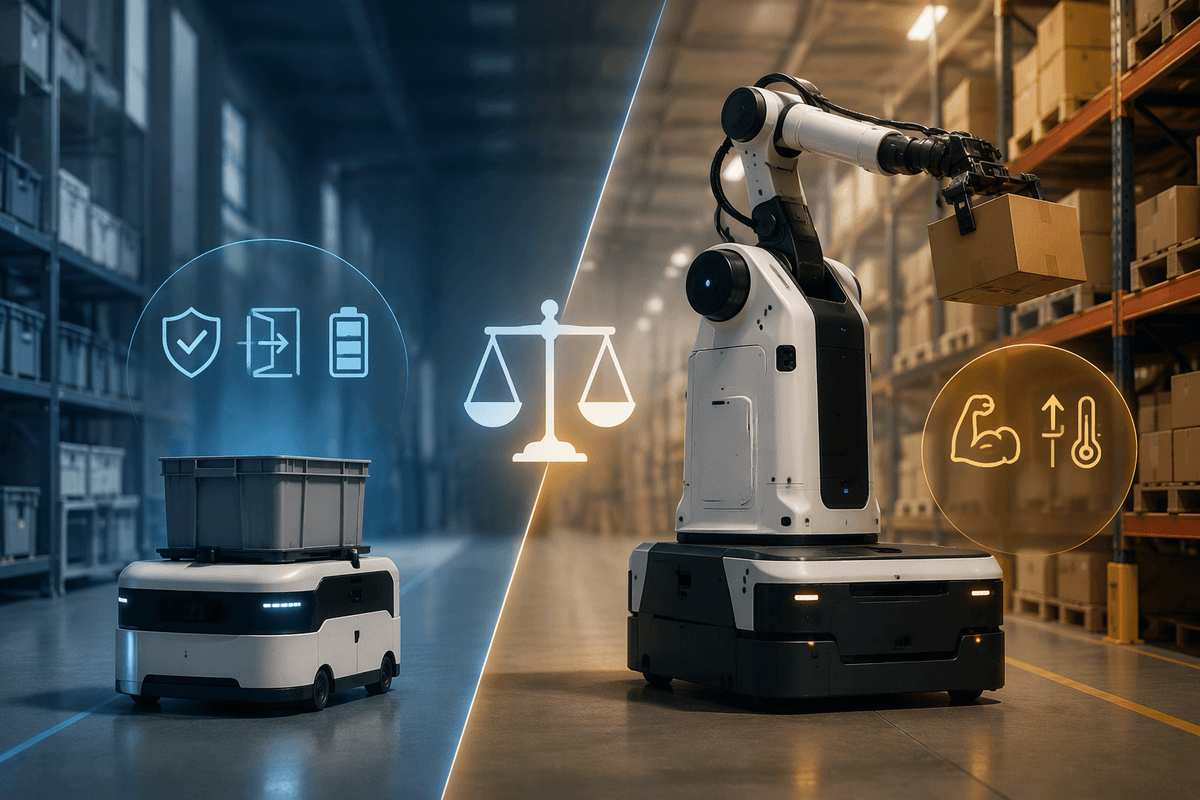
Imagine you’re buying a robot the way you’d buy a piece of shop equipment: you start with what it must do, then you eliminate bodies that make that harder. A quick screen is: how does it move (floor, rails, stairs), how does it interact (push, lift, hold, cut), and where does the load live (high shelves, tight bays, hazardous zones). If the route is flat and repeatable, a wheeled base or gantry is the default. If the work is “stay put and apply force,” brace it—fixed mounts, counterbalanced arms, or platforms that can clamp to the environment.
Then ask what you’re willing to pay for in complexity. More joints and balance buys flexibility, but it also buys tuning time, bigger safety buffers, and more maintenance. If a simple end effector and constrained motion can hit the throughput target, that’s usually the better body—even when a humanoid could technically do it.
Specialized shapes scale because they fit the job
Once a robot’s body is matched to a narrow job, scaling looks less like “deploying a new coworker” and more like copying a proven machine. A tote-picking cell, a floor-scrubbing base, or a rail-mounted loader can be duplicated because the motions, tools, safety zones, and training are the same every time. You get predictable cycle time, easier spare-parts stocking, and technicians who learn one playbook instead of improvising for every edge case.
The specialization needs a stable process. If the packaging changes weekly, aisles are constantly rearranged, or parts arrive in random orientations, the “fits perfectly” body can become the wrong body fast, and you pay again in fixtures, re-tuning, and downtime. The practical rule is simple: use the simplest shape that hits the throughput and safety target in the environment you actually have, not the one you hope to standardize later.