Why “household chore robots” still feel harder than expected
You’ve probably seen a robot fold a towel or load a dishwasher in a clean, well-lit demo kitchen and wondered why that isn’t already a standard appliance. The gap is that homes aren’t controlled environments. Every room has different lighting, layouts, object types, and “mess patterns,” and those conditions change hour by hour as people move things around.
A chore robot has to do more than execute motions. It must identify the right objects, understand where they are even when partially hidden, decide safe actions, and recover when something goes wrong. Doing that reliably raises costs fast: more sensors, more compute, more testing across edge cases, and tighter safety constraints around kids, pets, glass, and heat. Until perception and planning work in messy reality, demos will keep outpacing day-to-day performance.
Computer vision: the robot’s only way to see messy reality
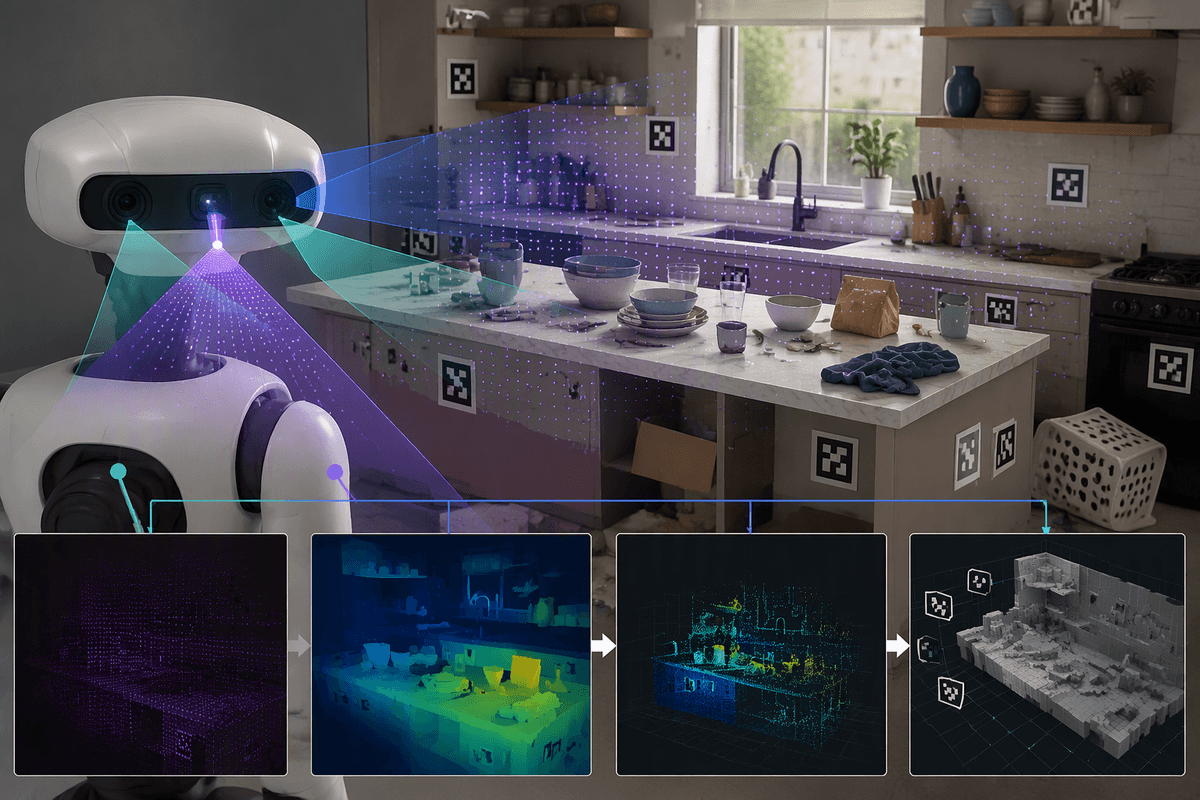
Picture the same “load the dishwasher” task in two homes: one has matte plates on an empty counter, the other has shiny cutlery mixed with food scraps, patterned bowls, and a half-open drawer casting shadows. The robot can’t assume anything. It needs computer vision to turn raw camera images into usable facts: what objects are present, where they are in 3D, which ones are graspable, and what surfaces are safe to contact.
That sounds like basic “object recognition,” but chores demand more. The robot has to distinguish a sponge from a lemon wedge, tell a black sock from a dark towel, and notice a glass at the counter’s edge before bumping it. It also has to handle constant variation in lighting, clutter, reflections, and motion from people walking through the scene. Getting vision that robust usually means multiple cameras or depth sensors, careful calibration, and on-board compute—each adding cost, power draw, and failure modes.
When vision fails: ambiguity, occlusion, and “where did it go?”
Even strong vision models break down in the moments that make chores “real.” A crumpled shirt can look like a towel until the robot lifts a corner. A reflective spoon can disappear into glare. A patterned countertop can hide a thin knife. These are ambiguity problems: the pixels support multiple plausible interpretations, and the robot has to choose an action without the confidence a human gets from context and touch.
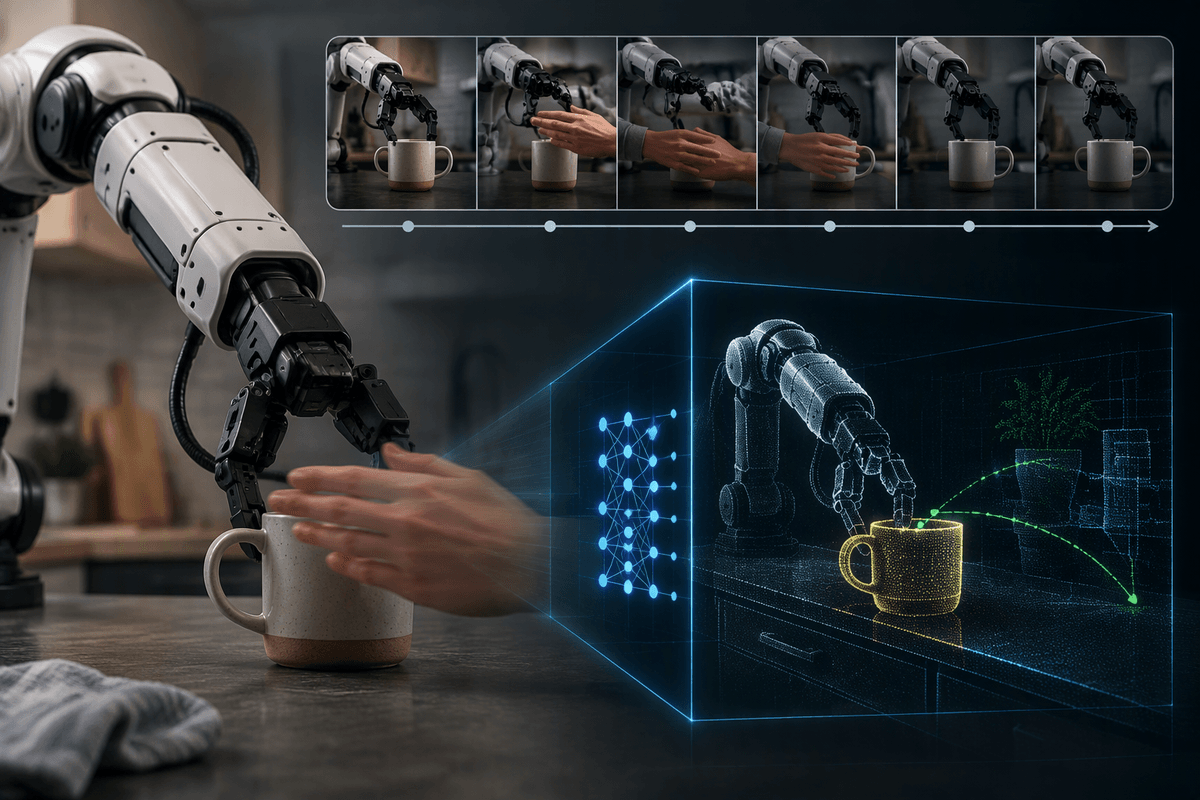
Occlusion is worse because the robot isn’t just uncertain—it’s blind. The target mug is behind a cereal box, the sock slid under a chair, the sponge is in the sink under foam. After one shove or grasp, objects move, roll, and fall, and the robot’s internal map can become wrong. Recovering means re-scanning, changing viewpoints, and sometimes poking or moving “irrelevant” items, which costs time and can create safety and mess risks.
Task planning: turning a goal like “clean kitchen” into steps
Watch what you do when you “clean the kitchen.” You don’t just start moving your arms; you pick a sequence that avoids rework and accidents. You clear counter space before wiping, put sharp knives somewhere safe, run hot water before scrubbing, and don’t stack greasy pans on clean plates. That is task planning: turning a vague goal into an ordered set of actions with checks along the way, like “collect dishes,” “open dishwasher,” “load by type,” “verify nothing blocks the spray arm,” “start cycle.”
For a robot, the plan can’t be a fixed script, because the starting state is never the same and actions change the scene. The robot has to choose between options (“move the cereal box or reach around it?”), track dependencies (“can’t wipe until the laptop is off the counter”), and recover when a step fails. Planning also has practical costs: more compute, more sensors to confirm progress, and more edge-case testing to keep failures from turning into broken glass or a burned hand near the stove.
Where vision and planning meet: grounding actions in the scene
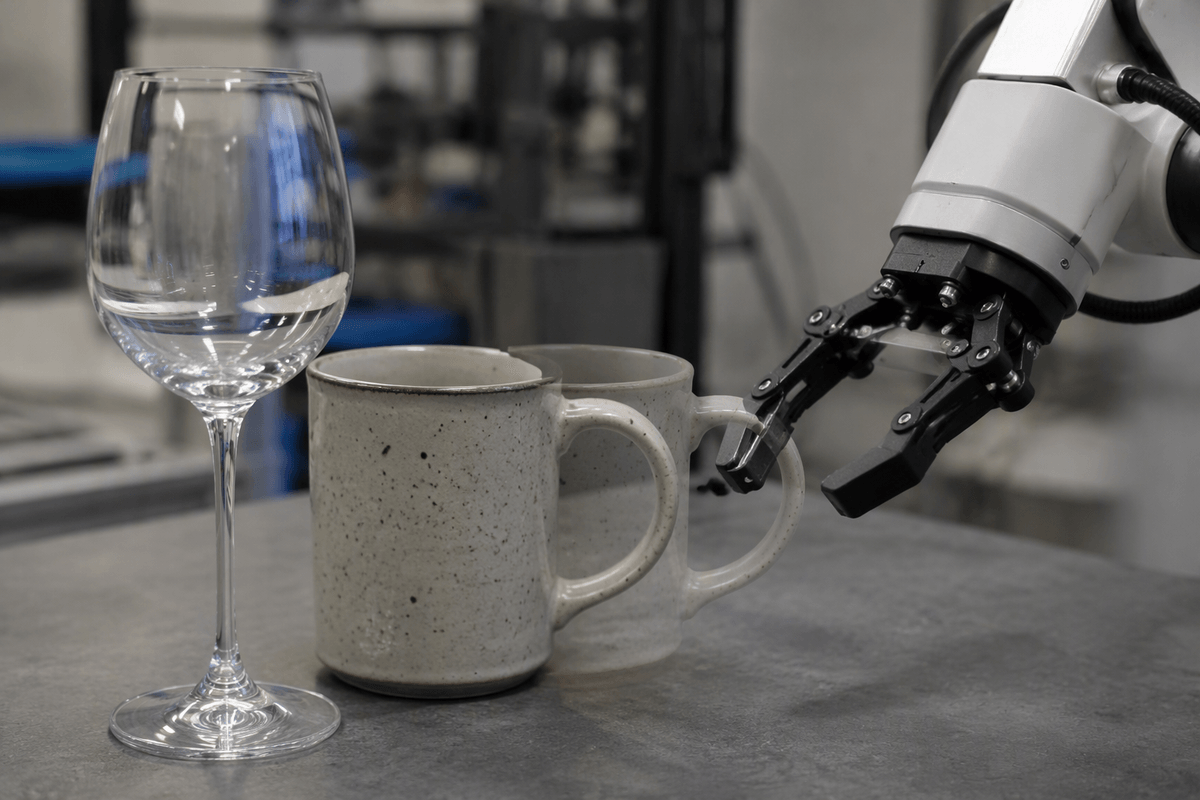
In a real kitchen, “pick up the mug” only works if the robot can tie its plan to the specific mug it sees right now, in the specific pose it’s in, on the specific surface it’s on. That link between a symbolic step (“grasp mug”) and the messy scene is grounding. It includes picking the right target, selecting a safe grasp point, choosing an approach path that won’t clip a wine glass, and checking that the mug is still where the robot thinks it is after the arm moves.
Grounding is where small perception errors become big behavior problems. If the robot’s 3D estimate is off by a couple centimeters, it can miss the handle, scrape the counter, or pinch a sponge instead. Good systems close the loop: plan a move, look again, adjust, and only commit to higher-risk actions when the evidence is strong. The trade-off is speed and cost—more sensing, more compute, and more time spent re-checking—yet skipping those checks is how “pretty good in demos” turns into unreliable at home.
Real chores that expose the full stack: laundry, dishes, tidying
Laundry looks simple until you count the decisions: is that a sock or a sleeve, is the item inside-out, is there something hard in a pocket, does this fabric stretch if you pull it. Vision has to segment a pile into individual garments, and planning has to pick actions that “create information,” like lifting and shaking to reveal edges before committing to a grasp. Then there’s the physical constraint: soft items slip, snag, and drag others along, so the robot needs repeated re-checks and often slower motions to stay reliable.
Dishes add glare, stacking, and safety. A robot has to tell clean from dirty, avoid knives hidden under plates, and handle wet surfaces that change friction mid-grasp. Tidying is the hardest to productize because the goal is underspecified. “Put things away” requires knowing what belongs where, negotiating exceptions (today’s mail vs. trash), and updating that knowledge as households change. That’s why these chores expose the whole stack—and why “mostly works” can still mean lots of human cleanup.
What to look for in the next wave of household robots
In product claims, look for evidence that the robot can re-perceive and re-plan mid-task, not just execute a polished sequence. Useful signals include multi-view sensing (not a single front camera), explicit recovery behaviors (back up, rescan, try a different grasp), and safety constraints that are described as testable limits (force caps, hot-surface exclusion zones, knife handling rules). Pay attention to how it learns your home: does it build a map and keep it updated, or does it need frequent “reset” runs?
Also ask what it costs in time, noise, and attention. A robot that succeeds by moving slowly, scanning constantly, and asking for confirmation may be technically honest but operationally annoying. The next wave will feel real when it can handle cluttered starting states, verify progress without human babysitting, and degrade gracefully—doing partial work safely instead of failing catastrophically.