Why static vision breaks down in real robot tasks
A robot that relies on single images can look impressive in a lab, then fail in a kitchen. In one frame, a mug and a hand might be clear; in the next moment, the hand blocks the mug, the mug shifts, and the robot has to guess what stayed put. Static vision is good at naming what’s visible, but real tasks hinge on what just happened, what is still there when it’s hidden, and what is likely to happen if the robot moves.
That gap shows up as brittle behavior: pausing when lighting changes, losing track of an object after a brief occlusion, or misjudging whether a door is opening or closing. You can patch around this with rules and extra sensors, but it raises cost and still leaves edge cases where the robot doesn’t have a stable, continuous understanding of the scene.
What robots must infer from motion, not snapshots
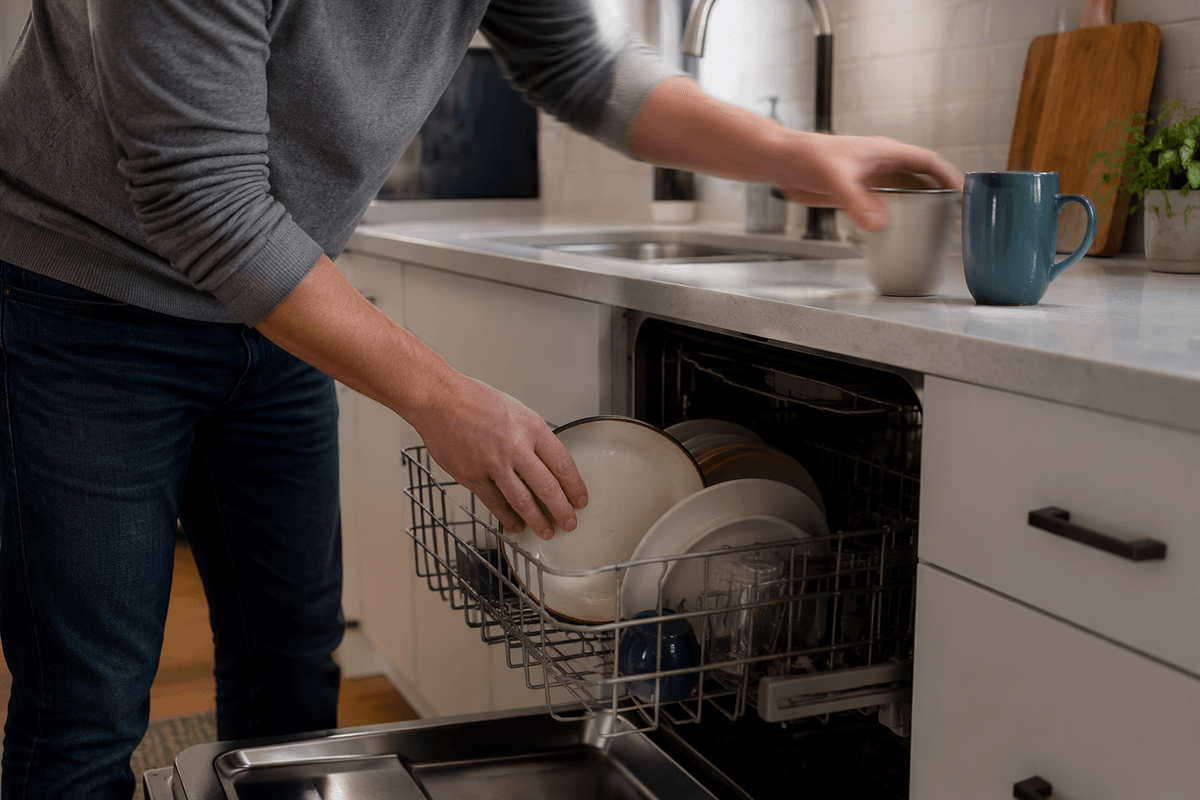
Watch a person load a dishwasher: they don’t re-identify the plate every moment—they remember where it went when it slips behind a cup, and they notice the subtle “it’s sliding” cue before it falls. A robot needs that same kind of inference: object permanence (the mug is still on the counter when a hand covers it), identity through change (the same sponge when it’s squeezed and deformed), and state, not just category (the drawer is half open, the lid is wobbling, the liquid is still pouring).
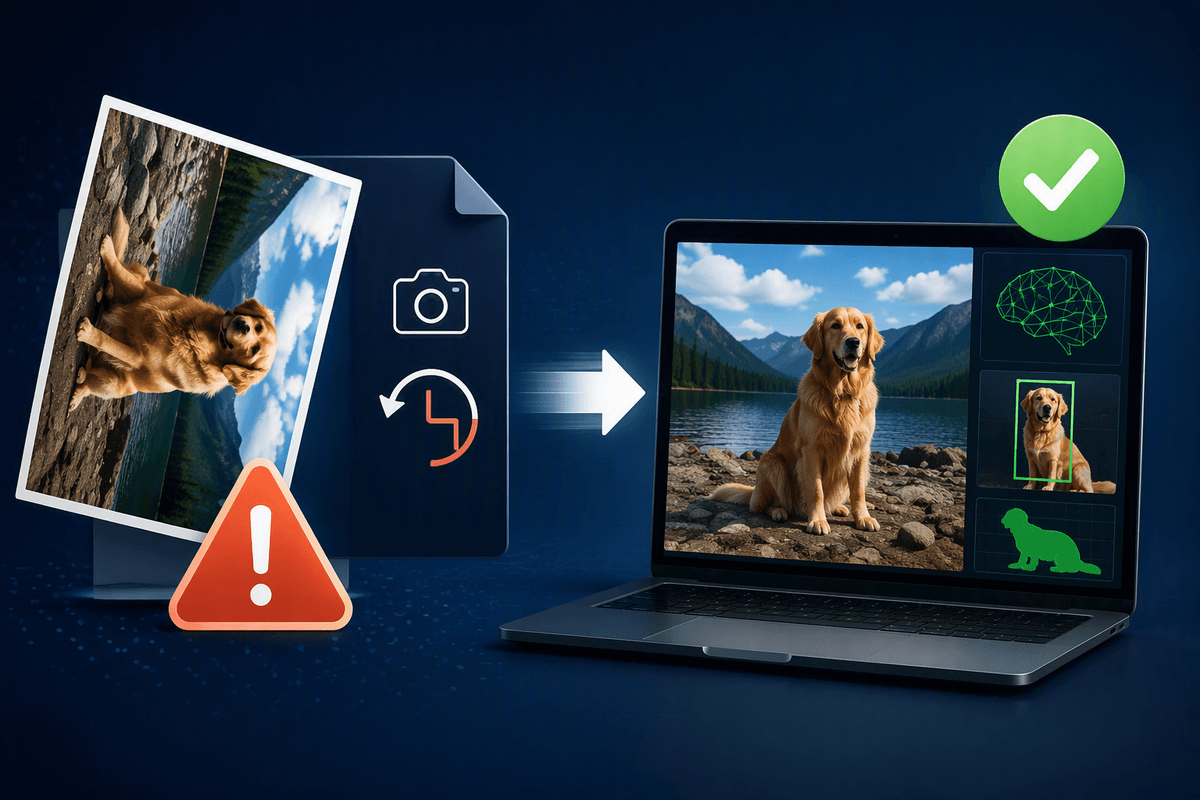
Motion also reveals causes. If a box shifts when the gripper touches it, friction is low; if it doesn’t, contact is stable. Those clues live in sequences, not pixels. The practical snag is that inferring them demands consistent timing and calibration—dropped frames, rolling shutter, or latency can turn “moving” into “teleporting,” and the robot plans on the wrong story of what’s happening.
Video models as the missing “world state” estimator
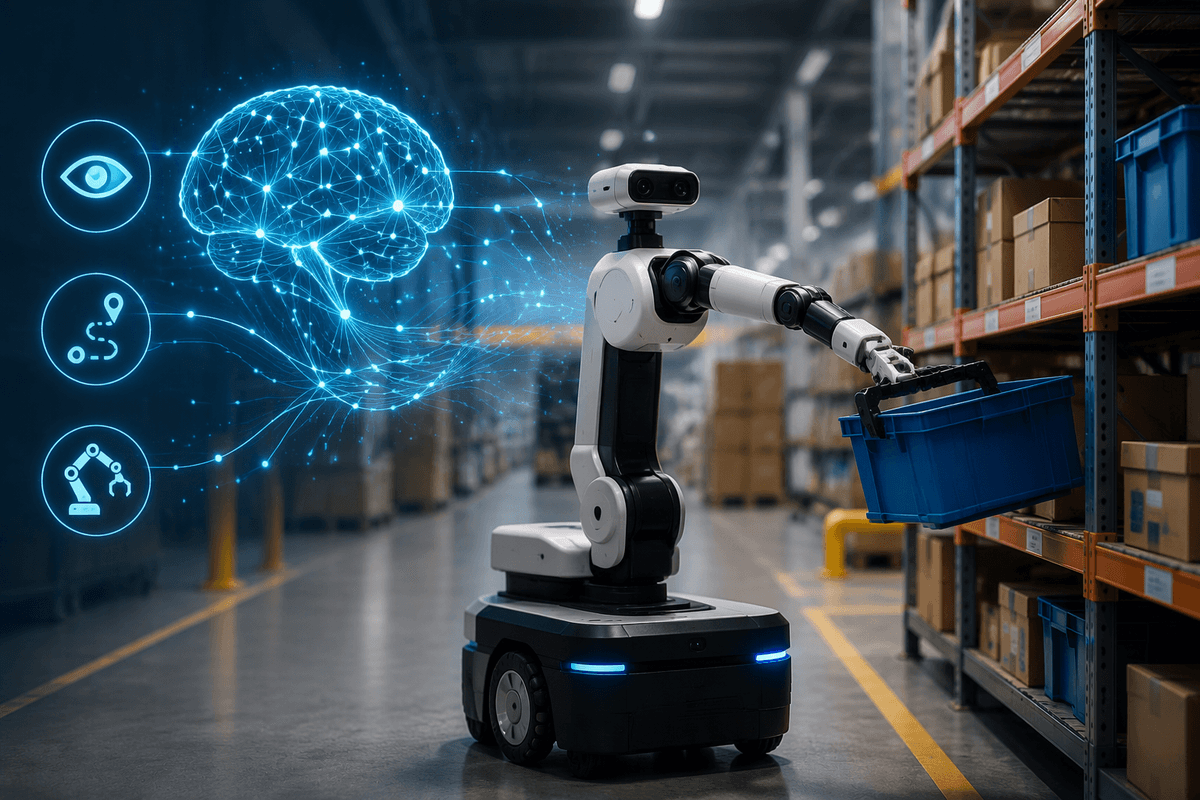
In practice, a robot doesn’t just need to “see”; it needs a continuously updated internal story of the scene: where things are, what they’re attached to, what’s moving, and what’s likely still true when something disappears behind an arm. Video models—systems trained to consume sequences rather than single frames—act like a world state estimator, fusing recent history into a representation that stays stable through blur, occlusion, and small viewpoint changes. Instead of re-deciding from scratch each frame, the robot can carry forward belief: the mug is probably still on the counter, the drawer is still sliding open, the towel is being pulled toward the edge.
That “belief over time” supports physical consistency. When the gripper bumps a light object, the model can expect a slide, not a jump; when a hinge rotates, it should keep rotating around the hinge, not drift. These models need lots of varied video, careful synchronization, and enough compute to run fast, or the state arrives too late to be useful.
Prediction vs tracking: two ways to use time
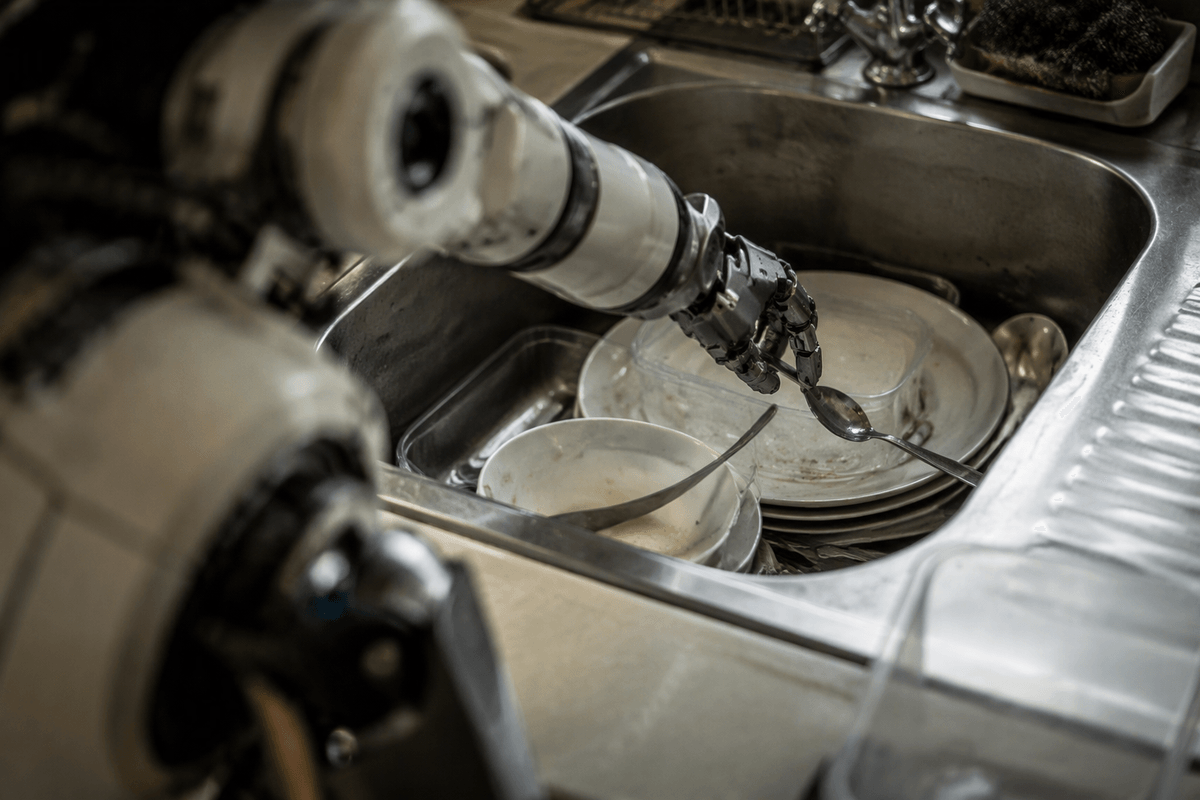
Picture a robot reaching into a cluttered sink. It can use time in two distinct ways: tracking, or prediction. Tracking is about staying “locked on” to what’s already there—maintaining the identity and pose of the same spoon as it rotates, keeping a handle’s location through brief occlusion, and updating the scene state as new evidence arrives. When tracking works, control feels steady because the robot isn’t relearning the scene from scratch each frame.
Prediction goes a step further: it estimates what the next moments will look like if nothing changes, or if the robot acts. A good predictor can anticipate a carton tipping as the gripper nudges it, or a drawer continuing to slide after release. That helps the robot choose safer motions and recover faster from partial observations. The trade-off is risk: the farther ahead you predict, the more small timing errors, unmodeled forces, and camera latency can compound into confident but wrong futures.
How temporal understanding changes planning and control loops
In a real task, planning isn’t a one-time decision; it’s a loop that keeps asking, “Did the world change the way I expected?” Temporal understanding makes that loop tighter because the planner can operate on a stable state estimate rather than raw frames. A reach plan can be conditioned on “the mug is still here, sliding slowly,” not “a mug-shaped blob is visible right now,” so the robot commits to smoother motions instead of stop-and-replan jitter whenever something flickers out of view.
It also changes what the controller treats as an error. If the video model can infer that contact happened and an object started drifting, the controller can adjust grip force or approach angle before the drift becomes a failure, instead of waiting for a clear new frame. If the state update arrives even 100–200 ms late, a fast arm can overshoot, and the system may end up “correcting” for a past world.
The hard parts: data, labels, and real-world messiness
Anyone who has tried to build a “video brain” for a robot runs into a blunt reality: the hardest data isn’t clean. Useful sequences need the same object categories, but under glare, motion blur, rolling shutter, smudged lenses, and hands that block the view at exactly the wrong moment. Robotics footage also has long tails—odd containers, reflective cutlery, deformable food—that don’t show up in tidy datasets, and the failures often come from those rare combinations.
Labels are another bottleneck. Getting frame-by-frame 3D pose, contact events, or “the drawer is still opening” state can require motion-capture rigs, careful calibration, and time-consuming human review. Self-supervised learning helps, but robots still need some ground truth to connect pixels to actions and consequences. Add distribution shift—different kitchens, different cameras, different arm speeds—and a model that looked stable in demos can quietly drift into guesswork in the field.
Deploying video models on robots under real latency limits
In a robot, “understanding the last second” is only useful if it arrives before the arm has already moved on. Video models fight two timing taxes at once: they want a window of frames to be accurate, but every extra frame in that window adds delay, and every millisecond of compute adds more. The practical result is that many systems run a small, fast temporal model on-board for high-rate state updates (tens of milliseconds), then use a larger model off-board or at a lower frequency to refine belief and catch slow-moving errors.
Engineers also end up designing around worst-case latency, not average. A model that is usually 40 ms late but occasionally 180 ms late can destabilize control, so pipelines use fixed-size buffers, frame dropping, and “latest-frame wins” policies that sacrifice some fidelity for predictability. Quantization, lower resolution, and shorter context help, but they can weaken exactly the occlusion and contact cues the model was meant to provide.
A pragmatic path: start small, then scale temporal capability
A practical way to adopt video models is to start where time buys clear robustness: short-horizon tracking through brief occlusions, slip detection during grasp, and “is it still moving?” state for drawers, lids, and pours. Keep the first version narrow, instrument it, and measure wins in retries avoided and recovery time, not just benchmark accuracy. This also makes latency budgeting concrete: you can set a hard target like “state within 60 ms” and design around it.
Then scale in layers: longer context for harder clutter, prediction conditioned on candidate actions, and selective use of bigger models when the small one is uncertain. The main cost is operational—capturing diverse video, maintaining calibration, and re-validating after camera, lighting, or speed changes—so the safest trajectory is incremental capability with continual field feedback.