A country that adopted “the future” early
Walk through Seoul and it’s easy to forget how recently much of this infrastructure arrived. South Korea moved quickly from early broadband and widespread apartment connectivity to a daily life built around digital services—banking, transit, shopping, entertainment—without long “in-between” periods. That matters for AI: when people are already used to trying new apps, scanning QR codes, and managing life on a phone, adding another layer of software doesn’t feel like a cultural leap.
When the default expectation is instant access and smooth interfaces, tools that save minutes—or remove awkward steps like translating, drafting, or searching—earn trust faster. But it also means higher pressure on products to work reliably, support Korean language nuance, and integrate cleanly with existing platforms, or users abandon them just as quickly.
Fast internet, mobile-first life, and low friction adoption
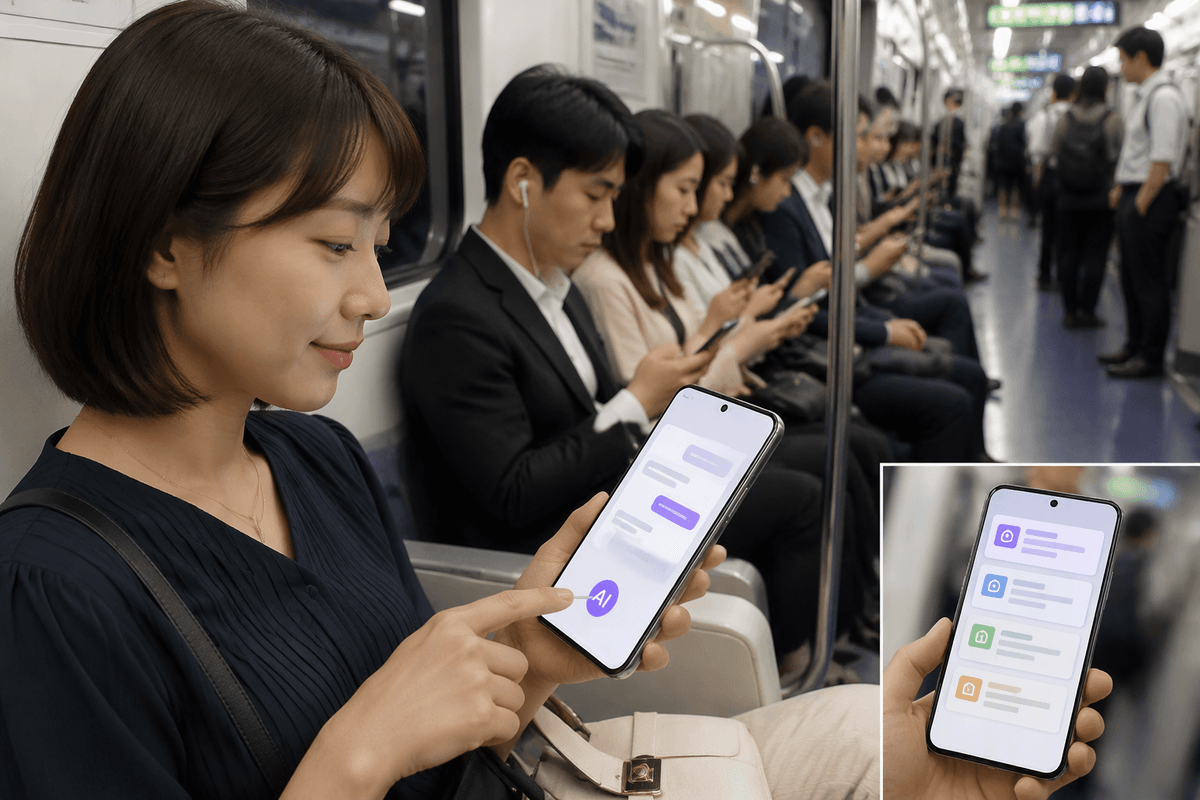
In Korea, fast connectivity isn’t just about streaming; it changes what people tolerate. If a tool takes too long to load, needs a laptop, or forces repeated logins, it feels broken. That pushes AI features toward “one-tap” habits: rewriting a message inside a chat app, summarizing a long post before a commute ends, or generating product copy directly in a marketplace seller workflow. When your phone is already the remote control for transit, payments, and delivery, an AI button can feel like a small upgrade rather than a new category.
Low friction also comes from how tightly services are bundled. Super-app patterns, integrated identity systems, and ubiquitous QR flows make it easy for new features to ride existing rails. This convenience depends on deep platform integration and strong uptime; small outages or awkward Korean-language output quickly turn into public backlash, and switching costs are low because alternatives are always a tap away.
Education pressure makes “better tools” feel necessary
It’s common to see AI show up first as a study aid, because the “extra edge” mindset is already built into how many students and families approach school. If you’re juggling hagwon homework, exam prep, and tight timelines, a tool that turns a chapter into a clean outline, generates practice questions, or explains a tricky math step in plain Korean feels less like a novelty and more like a practical upgrade. The same logic applies to English: drafting, paraphrasing, and drilling vocabulary are time sinks where immediate feedback matters.
That doesn’t mean the incentives are purely academic. Admissions and hiring often reward visible output—well-structured writing, crisp presentations, faster iteration—so “better tools” become part of staying competitive. The constraint is real: schools and parents worry about overreliance and plagiarism, and many AI subscriptions aren’t cheap, which can widen gaps between students who can pay for premium features and those who can’t.
Work culture rewards speed, polish, and constant iteration
A familiar office moment in Seoul is the late-afternoon message: the deck needs to be “cleaned up” before a morning meeting, the client wants three alternate headlines, or a manager asks for a tighter summary that fits on one slide. In that kind of environment, AI lands less as a bold transformation and more as a way to survive the cadence—rewriting a note to sound more formal, generating a first draft of a proposal, or compressing meeting notes into an action list that looks presentable.
Speed matters, but so does polish. Many roles reward output that feels finished: well-formatted tables, consistent tone, on-brand wording, and fast turnaround on revisions. AI can help teams iterate without adding headcount, especially in marketing, e-commerce, and internal planning. The “good enough” text can be risky: employees still have to check facts, protect sensitive data, and avoid copying language that could create legal or reputational problems.
Gaming, webtoons, K-pop fandom: AI as entertainment fuel
On a Friday night in Seoul, “AI” often shows up first as entertainment, not productivity: a game NPC that talks back, a streamer using voice filters, a webtoon creator testing backgrounds and color palettes, or a fan generating a poster-style image for a comeback countdown. These are low-stakes, high-frequency moments where people already expect personalization, fast iteration, and shareable output. If a tool makes content look better in minutes, it spreads through group chats and fandom communities without needing much explanation.
The same ecosystem also sets a high bar. Fans notice off-model faces, awkward Korean, and visual artifacts immediately, and creators worry about training-data ethics and platform rules. There’s also a cost curve: the best image, video, and voice features often sit behind subscriptions, so “AI creativity” can quietly favor those willing to pay for faster workflows and higher-quality results.
Government and big firms made AI feel inevitable
If you run a Korean business or manage a brand budget, it’s hard to treat AI as optional when the biggest institutions keep putting it in the foreground. National AI strategies, public-sector pilots, and “AI in government services” messaging create a baseline expectation that automation and language tech will be part of everyday workflows. That’s reinforced when major conglomerates and platforms ship AI features into tools people already use—search, maps, shopping, customer support, banking, and workplace suites—so adoption happens through upgrades, not big migrations.
The practical effect is social proof: if your carrier, portal, or employer rolls out an assistant, using it feels normal rather than experimental. The “inevitable” doesn’t mean seamless. Procurement cycles are slow, regulated industries demand audits and data controls, and Korean users are quick to punish errors in tone, honorifics, or misinformation, which raises the cost of getting AI deployments right.
Convenience meets demographics: service, language, and loneliness

A common scene is someone trying to get something done in the gaps of the day: reschedule a delivery, ask a bank about a fee, translate a message for an overseas purchase, or draft a politely worded complaint that won’t sound rude. AI fits because it reduces the small frictions that add up—shorter calls, fewer menu trees, fewer misunderstandings—especially when it can handle Korean honorifics, context, and “what do I say next?” moments in chat.
Demographics sharpen the appeal. An aging population raises demand for customer support, health-adjacent guidance, and simpler digital help, while a high share of single-person households makes solo problem-solving more common. That’s where AI companions, tutoring bots, and always-on service chat can feel less like gimmicks and more like a practical buffer against time, distance, or social hesitation. The high-quality Korean support is expensive to build and run, and misfires in tone, privacy handling, or emotional dependency risks can trigger fast public pushback.
So is it “love,” or a pragmatic relationship with AI?
It can look like “love” because the usage is frequent and public, but it’s closer to a deal: AI earns a place when it saves time, improves polish, or removes a social-language hurdle. Korean users tend to judge tools by whether they fit existing habits—chat-first communication, mobile workflows, fast service expectations—rather than by abstract fascination with technology. The adoption signal to watch isn’t hype; it’s whether AI ships inside platforms people already rely on and survives the first wave of tone, accuracy, and privacy complaints. The hard part to replicate elsewhere is the combination of speed, standards, and impatience.