Why neural-signal BCIs suddenly feel plausible again
Neural-signal BCIs feel plausible again because several slow improvements finally line up in the same product cycle. Sensors got denser and more stable, wireless electronics got smaller and lower power, and cloud-to-edge compute made real-time filtering and classification routine instead of exotic. At the same time, mainstream machine learning got better at pulling weak patterns out of messy data, which is exactly what brain signals are in day-to-day conditions.
The “plausible” doesn’t mean “easy.” The most reliable signals still come from expensive, clinic-centered setups or invasive implants, and long-term performance can drift as tissue changes or electrodes move. Progress is real, but it is shaped by practical limits: surgery risk, calibration time, and who pays.
What counts as a brain-computer interface in real life
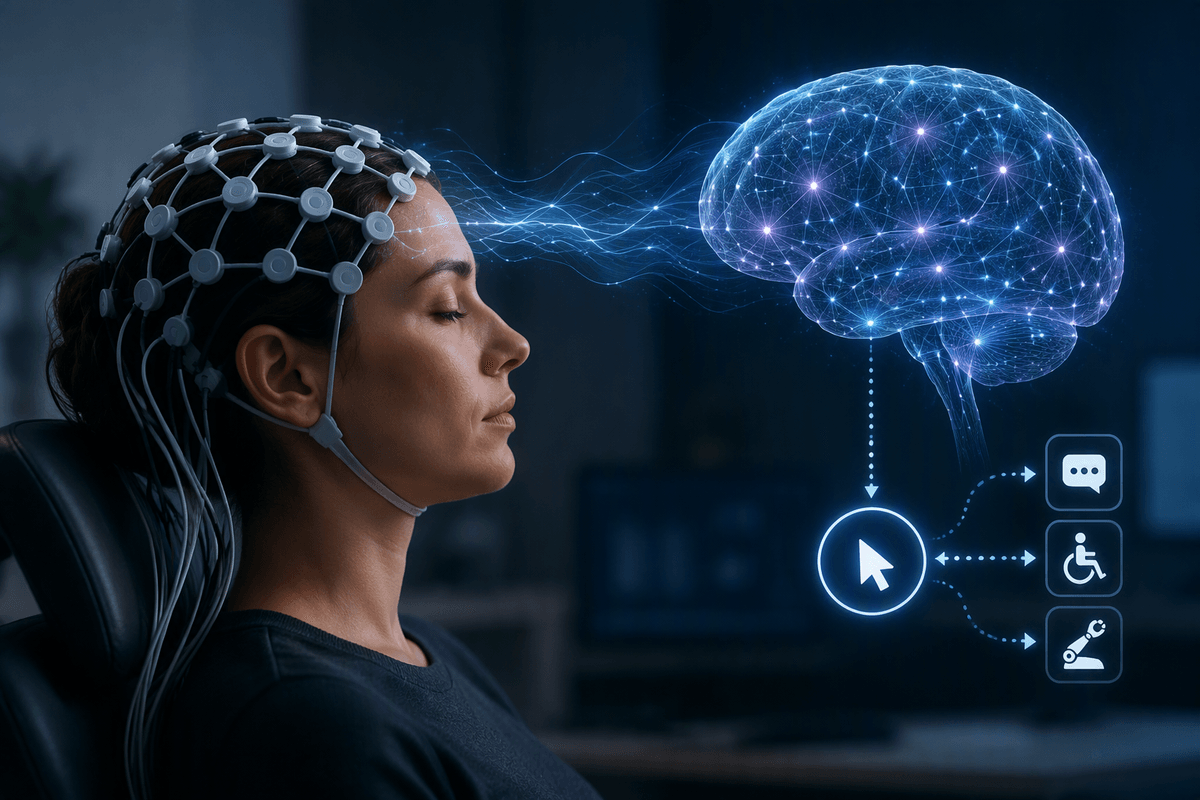
Picture the most common “BCI” moment: someone in a lab wearing an EEG cap, staring at a screen while a cursor nudges left or right. In real life, a brain-computer interface is any system that (1) measures neural activity, (2) converts it into a control signal, and (3) uses that signal to change something outside the nervous system—typing a letter, selecting a menu item, moving a prosthetic, or triggering functional electrical stimulation for rehab. The key is that the signal source is the brain (or closely related neural pathways), not muscle activity like EMG, eye tracking, or a voice command.
That definition quietly rules out a lot of hype. A meditation headband that reports “focus” is closer to a biosensor unless it reliably drives an action. A “thought-to-text” demo is a BCI only if the decoding works across sessions, not just after hours of per-user training. In practice, the line between BCI and assistive tech is often drawn by cost, setup time, and whether it works outside a controlled room.
From noisy brain data to usable inputs: the decoding pipeline
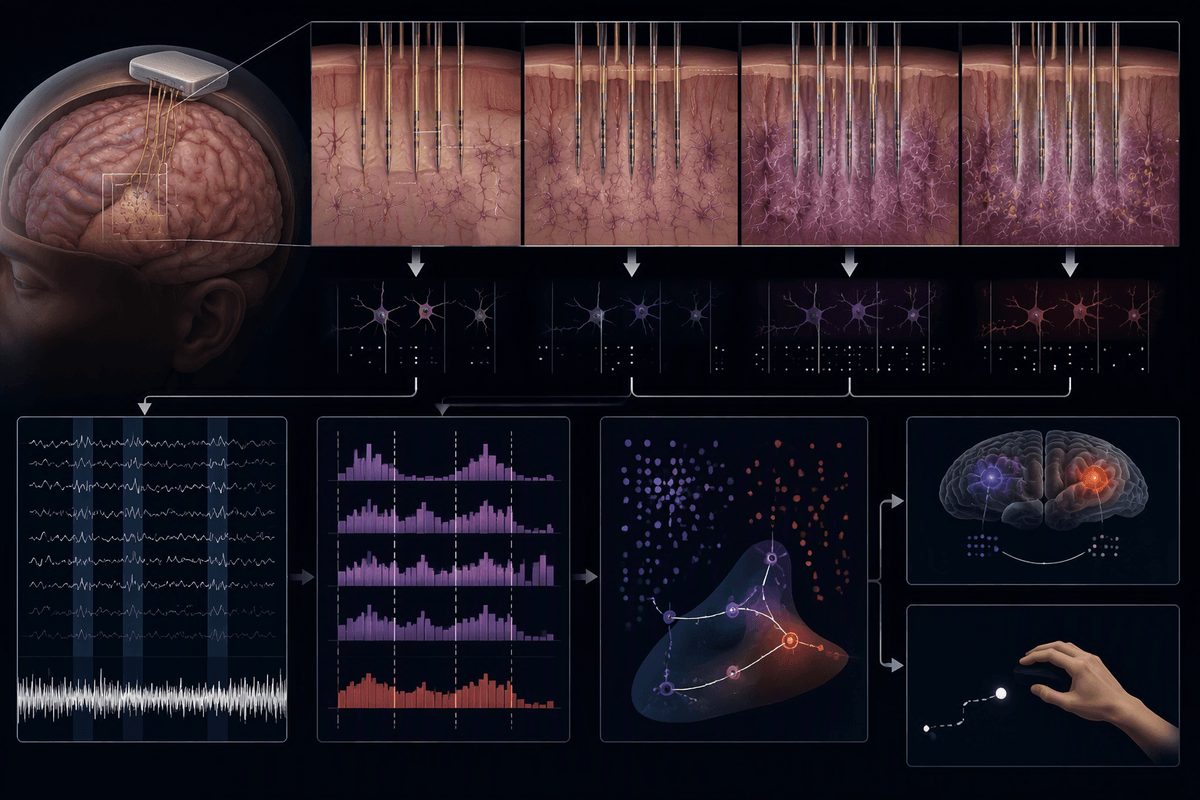
Think of the raw signal as a microphone pointed at a crowded room: you get the voice you want plus a lot of everything else. EEG picks up blinks, jaw tension, and line noise; implants add their own quirks as electrodes shift slightly or tissue response changes. So the pipeline starts with cleanup—band-pass filtering, rejecting obvious artifacts, and checking signal quality—because “garbage in” is especially unforgiving when the source is weak and variable.
After cleanup, the system slices time into short windows and turns each window into features a model can use: power in frequency bands, event-related bumps, spike rates, or simple summaries of how channels co-vary. A decoder then maps those features to an action: a discrete choice (left/right, letter selection) or a continuous control (cursor velocity). Many systems need labeled practice data each session, and performance can fall when the user is tired, the cap shifts, or the environment changes.
How modern AI models would “interpret” neural signals
In most BCI demos, “AI interpreting thoughts” really means pattern recognition over a narrow, well-defined task. The model is not translating inner speech or reading intent in the abstract; it is learning a mapping from signal snapshots to labels you chose in advance: “imagined left hand,” “imagined right hand,” “select,” or “don’t select.” Modern deep learning can help because it can learn useful representations directly from higher-dimensional inputs (many channels over time) and can fuse context, like recent history, to smooth out jitter.
A practical system often mixes model types. A neural network may do the heavy lifting on feature extraction, while a simple probabilistic layer (or a language model, for spelling) constrains outputs to what is likely. It can make typing feel fast, but it can also “autocorrect” the user into the wrong message. The cost is data. High-performing models usually need lots of per-person calibration or carefully collected training sets that are expensive and hard to label.
Accuracy, latency, and personalization: where BCIs break down
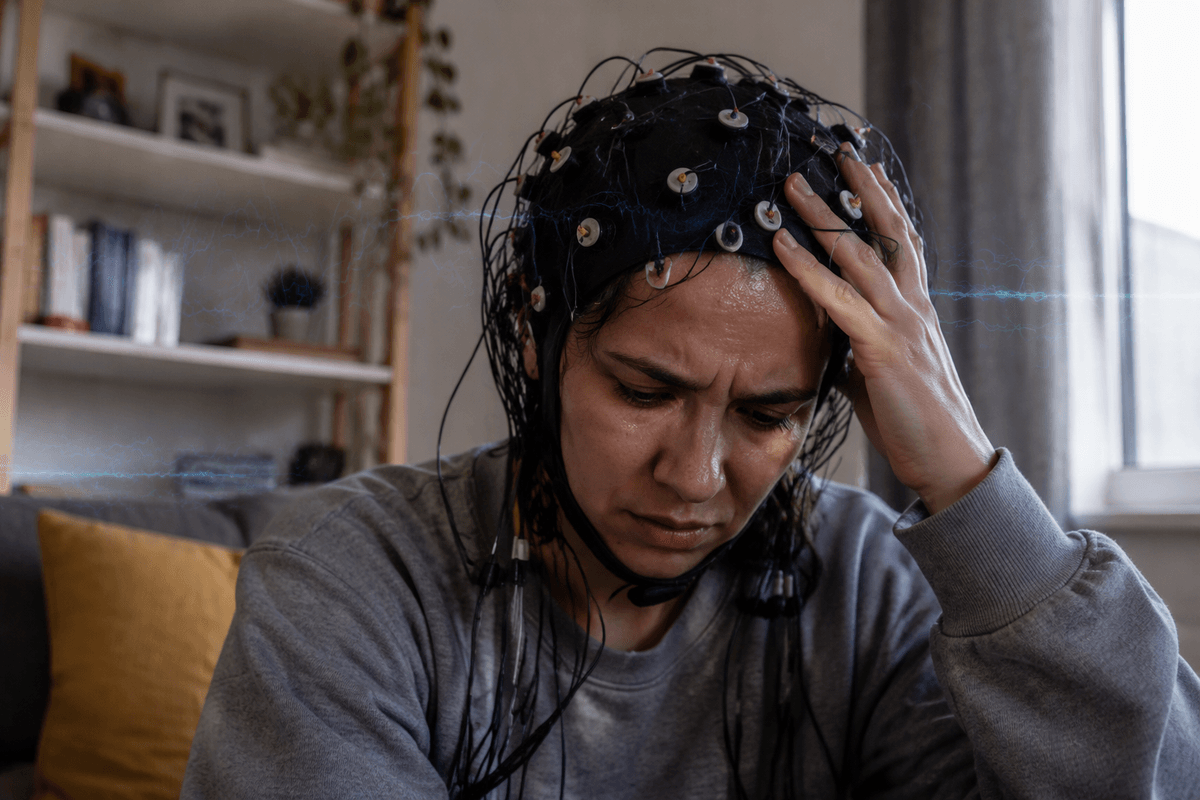
A recognizable frustration shows up fast: the system works in a demo, then feels unreliable in real use. Accuracy drops when signals shift for ordinary reasons—an EEG cap moves a few millimeters, skin impedance changes with sweat, the user is tired, or a medication changes attention. Invasive systems can drift too as tissue response evolves over weeks or months. Most decoders also have a “rejection problem”: if you tune them to avoid false clicks, they miss real intent; if you tune for sensitivity, they trigger at the wrong time.
Latency makes that trade-off more visible. Many decoders need a short time window to be confident, and then add smoothing to reduce jitter. That can mean a few hundred milliseconds to a second of delay, which is tolerable for spelling but frustrating for continuous control like a cursor, wheelchair, or robotic arm. Personalization helps—models adapted to one person can become far more usable—but the practical cost is calibration time, ongoing re-training, and a support burden that consumer products rarely budget for.
Most likely near-term uses: communication, control, and rehab
The near-term wins look less like “telepathy” and more like dependable, narrow channels for people who can’t use hands or speech. Communication is the clearest: spelling interfaces that combine a BCI “select” signal with strong language modeling can turn slow, error-prone clicks into usable text, especially for people with severe paralysis. The trade-off is setup and maintenance—many users will still need frequent calibration, careful electrode placement, and a caregiver or clinician in the loop.
Control comes next, but usually in constrained forms: switching modes, selecting from menus, or issuing a small set of commands to a cursor, wheelchair, or smart-home system. Continuous, low-latency control is harder, so hybrid setups matter—BCI for intent plus eye tracking, head movement, or residual muscle for speed and safety.
Rehab is a quiet but promising path: using neural signals to trigger functional electrical stimulation or guide therapy when the brain attempts a movement, tightening the feedback loop. It’s less flashy, but it fits clinical workflows and measurable outcomes.
Privacy, consent, and security when the data is your brain
Consider what happens when a BCI leaves the lab: neural signals become another data stream that can be stored, synced, and reused. Even if the raw recordings look like “noise,” they can still carry stable fingerprints (who you are), health clues (sleep, seizures, medication effects), and behavioral patterns (fatigue, attention) that weren’t the stated purpose. The risk is less mind-reading and more secondary use: data collected for cursor control later used for screening, marketing, or workplace monitoring.
Consent also gets harder over time. A one-time form doesn’t cover model updates, new decoding targets, or sharing data with vendors who run cloud inference. Security needs to assume worst cases: compromised apps, leaked training sets, or adversarial inputs that cause unintended “clicks.” Practical safeguards—on-device processing, short retention windows, and audit logs—add cost and can slow iteration, but they are the difference between a medical tool and a surveillance surface.
A realistic path forward without the mind-reading myth
A more realistic path is to treat BCIs like other assistive and medical interfaces: start with narrow signals, tight safety constraints, and outcomes you can measure. The winners will look like “reliable select,” “steady 2D cursor velocity,” or “trigger stimulation during attempted movement,” not open-ended decoding of private thoughts. That also means accepting limits: many users will still need setup time, periodic recalibration, and clinical support, and consumer-grade sensors will underperform in messy environments.
The practical operating principle is simple: judge claims by what the system controls, how often it works across days, and what it costs to keep working. If a demo depends on hours of per-person training, perfect electrode placement, or aggressive language-model autocorrect, it’s a prototype—not a mind reader. Progress will be real when these systems become boring: predictable, testable, and easier to use than the alternatives.