Why “AI intelligence” changes with the task you choose
Someone shows you a model drafting a clean email in seconds, then you try it on a messy policy question and it suddenly feels confused. That swing isn’t mystery “mood.” It’s the task changing what counts as success and what information the model can safely assume. Many demos reward plausible completion: keep the tone, follow the template, produce something that looks right. Other tasks punish gaps: missing constraints, conflicting goals, unstated assumptions, or facts that must be correct. “Intelligence” here is partly a measurement choice, and you pay for the wrong choice with rework, verification time, or real business risk.
It helps to treat a model like a tool with uneven strengths rather than a general mind. Give it a narrow target and strong scaffolding—examples, boundaries, formatting rules—and it often looks sharp. Ask it to decide what the target should be, hold a plan across steps, or justify claims against reality, and its weak spots show up fast. The practical move is to define the task first: what inputs are available, what errors are unacceptable, and how you’ll check the output. The same model can be “great” or “unreliable” depending on those choices.
Pattern-heavy tasks make AI look fluent and fast
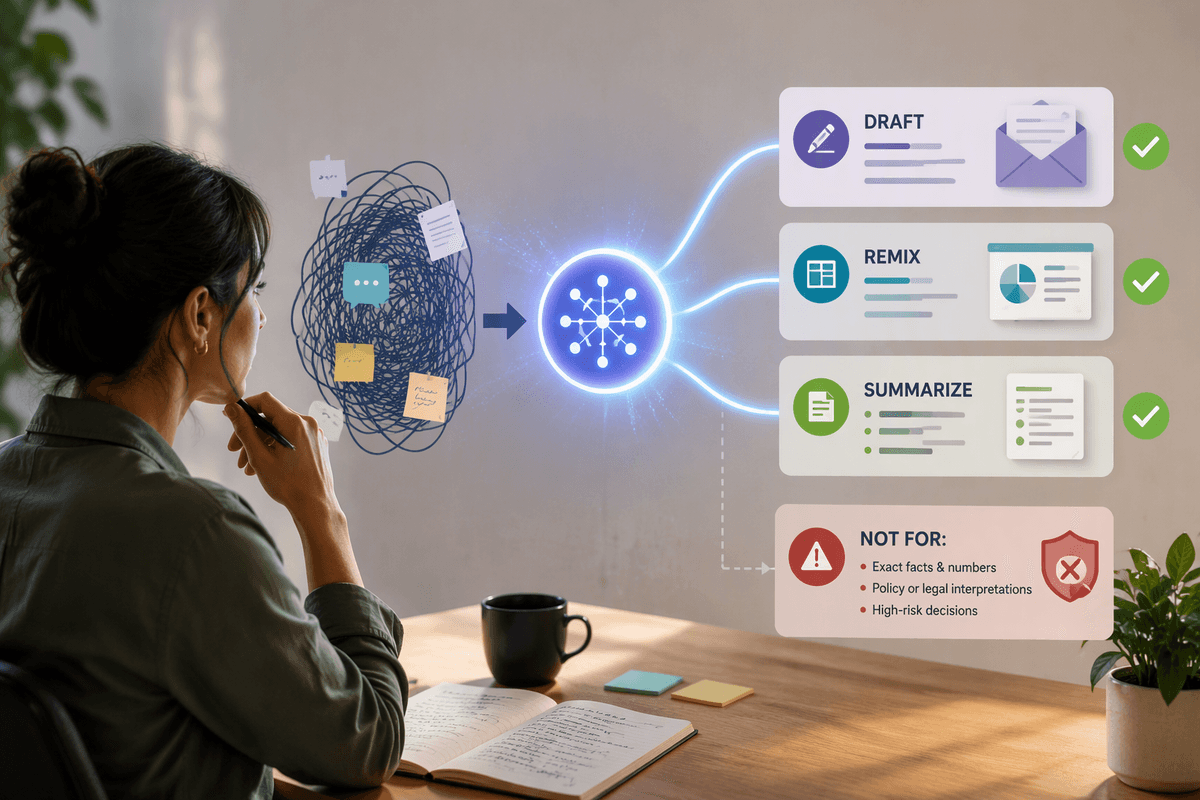
You’ve likely seen the “wow” moments where a model feels almost effortless: summarizing a long thread, rewriting copy in a new tone, generating ten headline options, or producing code that looks idiomatic. These are pattern-heavy tasks with lots of training examples and clear surface cues. The model can lean on familiar structures—email openings, meeting notes formats, common API usage, standard argument shapes—and deliver something that reads cleanly on the first pass.
That fluency can be misleading because the output quality is often judged by how well it matches expected form, not whether it’s correct in the ways that matter. A summary can sound balanced while quietly dropping a key caveat. A sales email can be persuasive while making a claim your product can’t support. Even code can compile while encoding the wrong assumption about edge cases or data types. The speed is real, but the hidden cost is review: someone still has to check intent, constraints, and factual claims, especially when “looks right” is not the same as “is right.”
Open-ended goals reveal weak planning and shaky priorities

You see this when you ask for something like, “Design a go-to-market plan,” or “Fix our onboarding.” The model will often produce a confident outline, but it’s mostly filling a familiar template. What’s missing is the hard part humans do almost automatically: choosing a goal that fits the situation, trading off speed vs. risk, and deciding which unknowns must be resolved first. If you don’t provide those constraints, the model tends to treat all requirements as equally important, or it will optimize for the most “complete-looking” answer rather than the most useful one.
Ask it to commit to priorities and the cracks show. It may recommend running five initiatives “in parallel” without staffing reality, or propose metrics that can’t be measured from your actual data. It can also shift objectives midstream—starting with retention, then drifting into acquisition—because the prompt’s ambiguity becomes a moving target. The practical cost isn’t just a flawed plan; it’s the time you spend extracting assumptions, pinning down decision criteria, and forcing a sequence of steps that a real team can execute.
Long-horizon work breaks on memory, drift, and hidden state
Longer projects expose a different weakness than one-off prompts. A rollout plan may take several weeks to develop, a specification may change across multiple meetings, and a codebase may require several rounds of refactoring. Early decisions can remain consistent for a while before the model begins to reverse course, revive options that were already rejected, or overlook a constraint introduced much earlier. A tool may advertise persistent memory, but effective working context remains finite. What stays active tends to depend on the material currently available and the patterns most likely to surface, rather than on the decisions that actually matter to the project.
The problem becomes harder to control when the model fills gaps with assumptions that never get stated explicitly. It might decide which user group matters most, interpret what “success” means, or settle on a deadline without confirming any of those choices. Once that assumption enters the workflow, later decisions may build on it as though it were an established requirement.
Long-horizon consistency is therefore less a prompting problem than a workflow problem. Keep the plan, key decisions, and constraints in a living document rather than relying on conversation history alone. Add deliberate checkpoints that restate the requirements, surface unresolved questions, and confirm the decisions already made. Some reconciliation work is unavoidable, too. The longer a project runs, the more time needs to be reserved for checking that new work still aligns with the decisions that came before it.
Tasks needing grounded facts stress truth, sources, and recency

You feel the reliability gap most when the answer has to be anchored to the world: “What does our regulator require?”, “What changed in the latest product release?”, “What’s the market share this quarter?”, “Did that court ruling apply to our state?” The model can still produce a smooth response, but fluency is no longer a proxy for correctness. If it was never trained on the newest information, or if it saw conflicting versions of a fact, it may blend them into something that sounds authoritative and is wrong in a way that’s hard to spot.
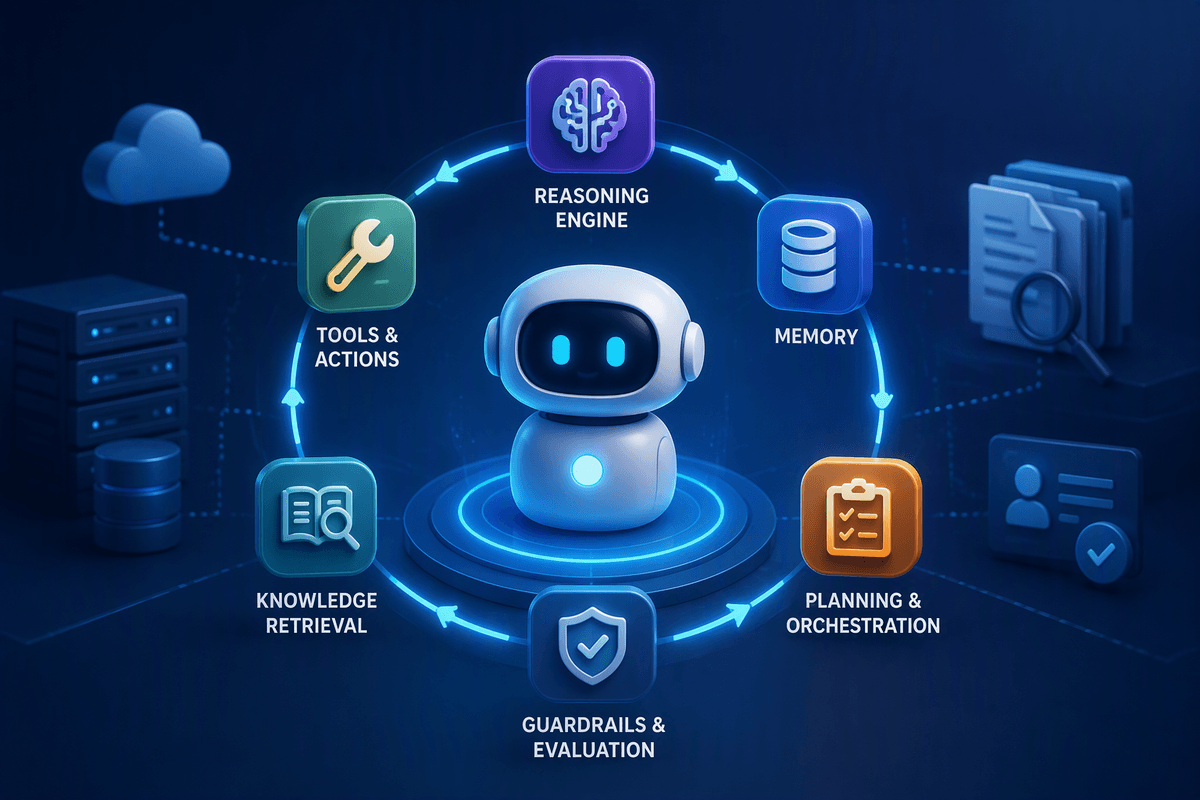
Grounded tasks also expose a tooling issue: without retrieval, citations, and date awareness, the model can’t reliably separate “I remember this pattern” from “this is true right now.” Adding sources helps, but it adds cost—integrations, latency, and new failure modes like pulling an outdated page or misquoting a document. A practical expectation shift is to treat factual outputs as drafts with receipts: require citations, require timestamps, and define what “fresh enough” means before you trust the answer in a decision.
Real-world action exposes safety, control, and accountability gaps
You see another jump in “intelligence” the moment the output is allowed to do something, not just say something. Drafting a support reply is low-stakes until the model can actually refund an order, reset a password, or change a shipping address. Now the failure modes aren’t just “wrong,” they’re operational: taking an irreversible action, acting on the wrong account, or following a malicious instruction hidden in a ticket. Even a generally helpful agent can be brittle when it has to interpret permissions, confirm identity, and handle edge cases consistently.
This is where safety and control stop being abstract. You need hard gates: scoped tools, explicit approvals for sensitive steps, clear audit logs, and a way to reproduce why an action happened. That adds real cost—engineering effort, monitoring, and slower workflows—and it forces a question demos can dodge: when something goes wrong, who is accountable, and can your organization prove what the system saw, decided, and did?
A practical way to match tasks to the right expectations
A useful filter is to score the task on three axes before you deploy: how expensive a mistake is, how well you can verify the output, and how stable the needed facts are. Low-cost, easy-to-check work (copy drafts, first-pass code, meeting notes) can run with lighter review. As cost and irreversibility rise, add structure: fixed inputs, explicit constraints, stepwise checkpoints, and a human sign-off before any action.
Then test like you’ll operate: a small suite of “known hard” cases, time pressure, messy inputs, and one or two adversarial prompts. If it only looks good in clean demos, treat it as a drafting assistant, not a decision-maker.