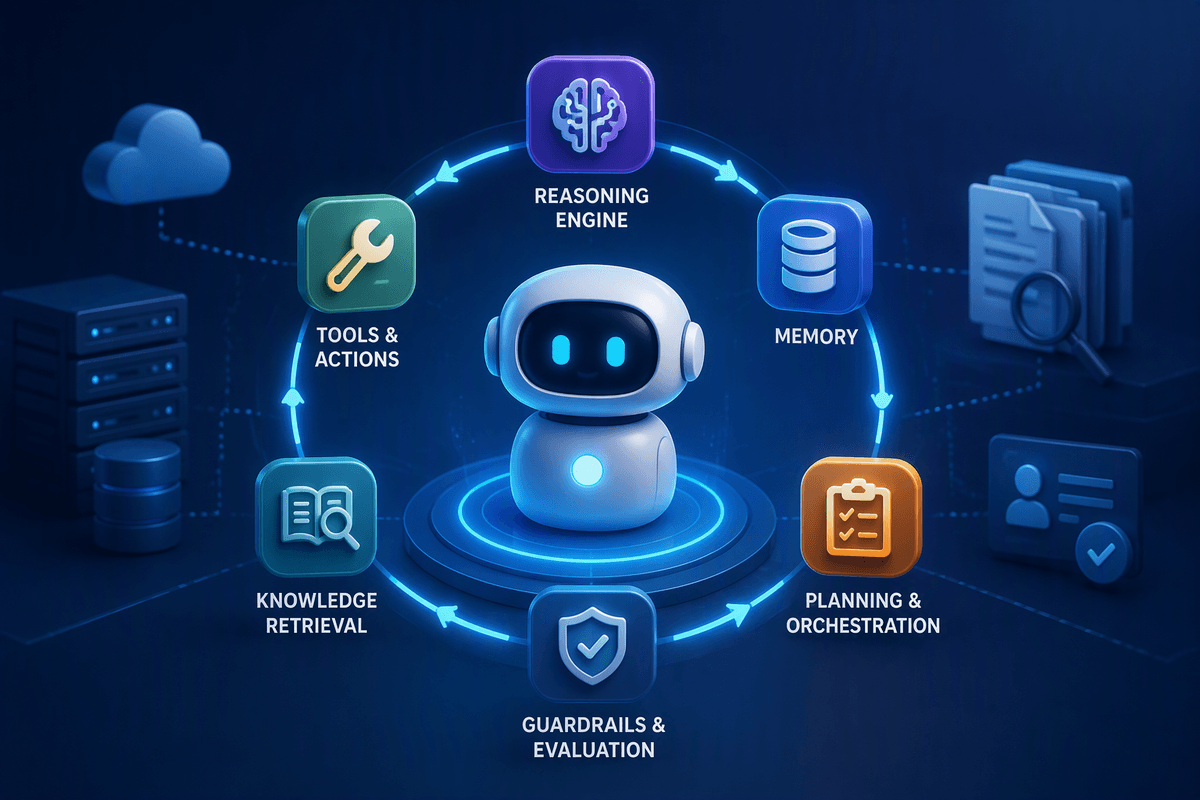
Why chatbots are starting to feel like a dead end
A familiar pattern has set in: you ship a chatbot, deflect some basic “where is my order” questions, and then hit a ceiling. The bot handles FAQs, but anything that requires looking up an account, changing a record, or coordinating across systems still gets escalated to a human. When leaders ask for more impact, teams respond by stuffing in more prompts, more intents, and longer policies—yet the experience often gets slower, not smarter.
The dead end isn’t the model; it’s the product shape. Chatbots mostly talk, so they’re judged on answers, not outcomes. Real business value shows up when software completes work: verifying eligibility, updating a ticket, scheduling a return, or reconciling a discrepancy. Trying to force those workflows through a conversational interface creates hidden costs—complex integrations, constant prompt tuning, and risk management bolted on after the fact—without a clear path to reliable execution.
What makes an “agent” different from a chatbot
You see the difference the moment a customer asks for something that isn’t “answerable,” but “doable.” A chatbot can explain the return policy; an agent can initiate the return, check eligibility, generate the label, update the order system, and confirm the refund timeline—using the same systems your team uses. The shift is from producing a response to executing a sequence of steps with tool access, state (what it already learned about the case), and a defined goal.
That added capability changes the economics and the risk. Agents need authenticated connections to systems of record, durable logs of what they did, and rules for when to ask for approval. They also need evaluation beyond “did it sound right?”—you measure task completion, error rates, and cost per successful outcome. Every new tool and permission expands the blast radius, so “make it helpful” becomes “make it safe, observable, and reversible.”
The business workflows where agents actually pay off

AI agent ROI appears most clearly in semi-standardized, high-volume work bogged down by swivel-chair steps across disconnected systems. Customer support and operations flows — subscription changes, address corrections, warranty replacements, invoice disputes, onboarding checklists — fit this profile perfectly. The core challenge of these tasks rarely lies in policy knowledge, but in collecting accurate data fields, validating entries, and pushing updates to CRM, billing, and ticketing systems in the correct sequence. These workflows also carry a clear definition of “complete,” making it straightforward to measure completion rates, time-to-resolution, rework rates, and cost per successful case.
Internal service desks deliver similarly strong returns: password resets with identity verification, software access requests, procurement routing, and routine compliance evidence gathering. The catch is that the highest-value use cases are unglamorous by design: stable processes, reliable system APIs, and clean reversibility when errors occur. Where workflows frequently hinge on judgment calls, missing data, or unclear cross-team ownership, the cost of building custom tool access for the agent quickly outpaces the cost of the underlying model itself.
Where chatbots still win—and you shouldn’t overbuild
You still want a chatbot when the job is primarily triage, education, or routing—and when “good enough” is acceptable. Policy explanations, product guidance, store hours, basic troubleshooting, and collecting the minimum details to create a ticket are classic wins. They’re low-risk because the bot isn’t changing records, and they’re cheap to operate because you can keep integrations shallow and permissions minimal. In many orgs, that’s 60–80% of the volume that clogs human queues.
Overbuilding starts when teams wrap a simple FAQ bot in tool access “just in case,” then spend months on auth, logging, audit reviews, and edge-case handling to automate a task that only happens a few times a week. If the workflow doesn’t have a clear definition of done, or if humans routinely override the process anyway, a straightforward chatbot plus a clean handoff can outperform an agent on cost, reliability, and time-to-ship.
What you need for agents: tools, data, and evaluations
A recognizable failure mode is giving an agent “access” but not giving it usable tools. Agents need narrow, well-defined actions—create a return, update an address, fetch invoice status—not a generic database connection and a hope that prompting will keep things safe. Each action should have clear inputs, validation, and error messages the agent can recover from, plus logs that let an operator replay what happened. This is where teams feel the cost: you often have to clean up APIs, add missing endpoints, standardize field names, and align permissioning across IT and security before the agent can do reliable work.
Data matters less as “more context” and more as “the right source of truth.” If the agent can’t reliably find account status, entitlements, or the latest ticket state, it will either stall or take the wrong action with confidence. Treat knowledge bases as versioned products (ownership, review cycles, and deprecation), and treat system data as contract-driven (schemas, latency expectations, and fallbacks).
Evaluation has to look like operations, not demos: task success rate, time-to-resolution, cost per completed case, human-approval frequency, and the top failure reasons. Without that, you can’t tell whether you built automation or just a faster way to generate plausible-looking mistakes.
Managing risk when software starts taking actions
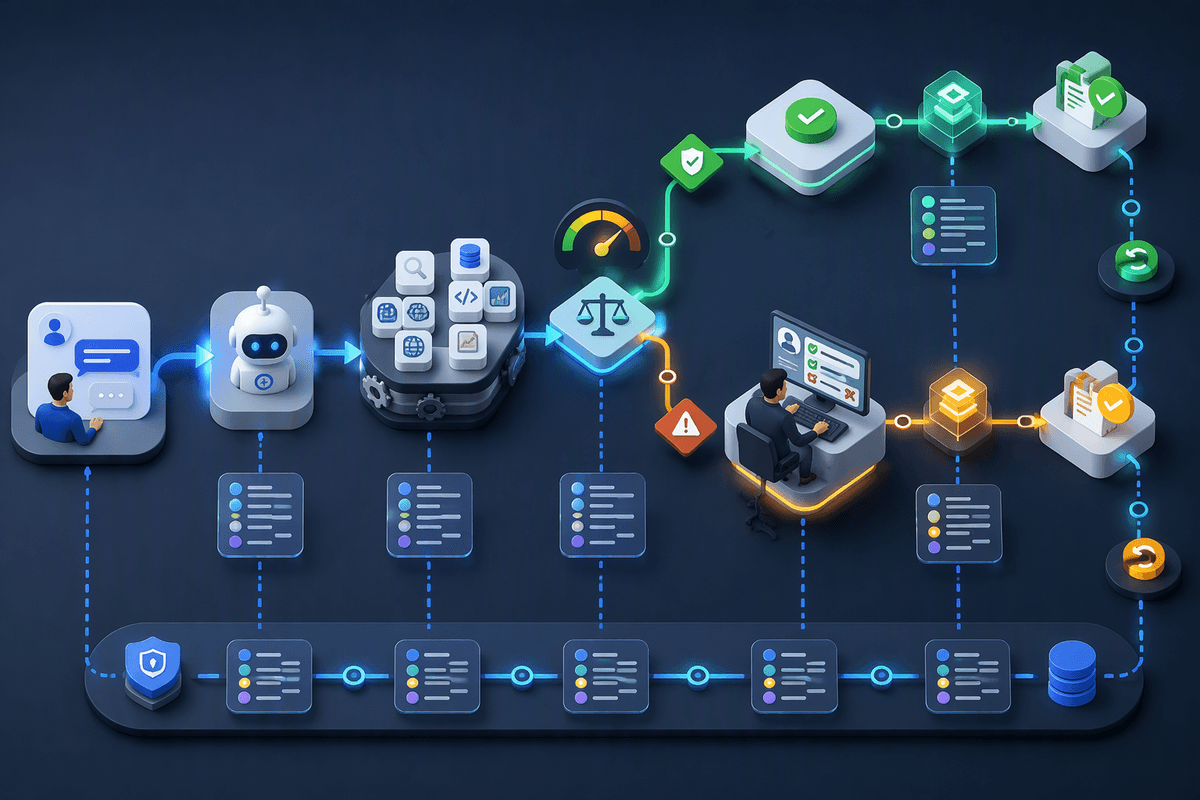
The first time an agent can change a record, send an email, or trigger a refund, the question stops being “is the answer accurate?” and becomes “what’s the worst-case action it can take, and how quickly can we detect and undo it?” Risk shows up in predictable places: wrong-customer actions from identity mismatches, duplicate or conflicting updates when the ticket state changes mid-flow, and “silent failures” where the agent thinks it completed a step but the system rejected it. You manage this by designing for reversibility (voidable transactions, drafts, idempotent operations), tight scopes (least-privilege permissions per tool), and strong traceability (every action logged with inputs, outputs, and the triggering conversation).
Approval gates should be tied to impact, not uncertainty. Let the agent auto-complete low-dollar, easily reversible steps, but require human sign-off for refunds above a threshold, data deletions, or anything that touches regulated fields. The practical cost is ongoing: audits, exception reviews, and maintaining guardrails as policies and systems evolve.
How to move from chatbot pilots to agent rollouts
You’ll recognize you’re ready to roll out when the agent can complete a small, real workflow end-to-end with stable success metrics—not when a demo “looks smart.” Start with one narrow lane (for example, address changes or subscription pauses), give it two or three hardened tools, and route anything ambiguous to a human with a clean handoff and full action logs. Expand scope by adding steps only after you can explain failure modes in operational terms: top error causes, rollback time, and approval rates.
The bottleneck is usually organizational, not model quality: security reviews, system owners who control APIs, and support leaders who must accept new escalation paths. Treat rollout like a product launch with SLAs, on-call, and change management, or the first incident will freeze adoption.